Collina Chunky Crochet Throw: Free Beginner Pattern
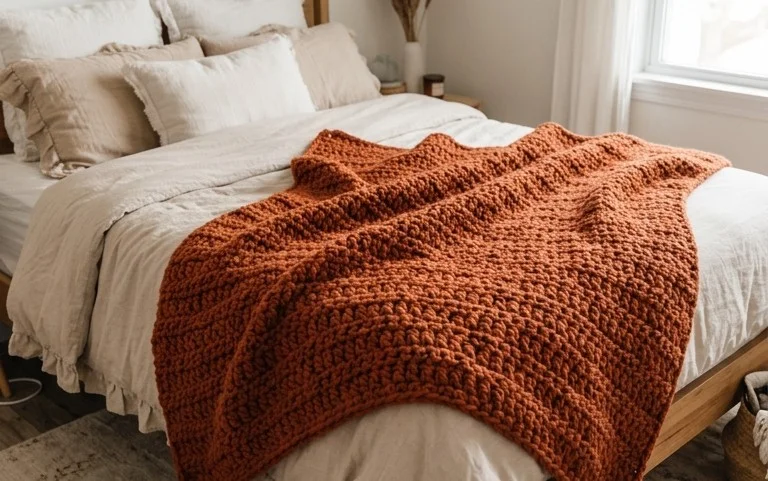
Soft, oversized stitches define this thick blanket that adds immediate warmth to any chair or sofa corner. The weight of the heavy yarn makes it physically satisfying to hold while you work, creating a dense fabric that keeps its shape without becoming stiff. Beginners will find the process straightforward because it relies on repetitive movements, making it a productive way to spend an evening while listening to a podcast. You will learn how to maintain even tension across wide rows and how to create clean, straight edges for a professional look without needing advanced shaping techniques.
Why You’ll Love This Pattern
This classic crochet dishcloth works up quickly using basic stitches, making it a reliable project for practicing tension control. The tight weave of the single crochet stitch provides the durability needed for scrubbing dishes, while the cotton fiber absorbs water efficiently. Because the pattern relies on a simple row-by-row construction, you can easily carry your work in a bag for portable crafting during commutes or waiting rooms. Using cotton yarn ensures the finished product withstands high-heat washing, which is essential for maintaining hygiene in the kitchen.
I managed to finish three of these over the weekend using a single skein of yarn. The texture is perfect for heavy-duty cleaning and they do not lose their shape after a spin in the laundry.
— Sarah, home crafter
Pattern Overview & Skill Level
- Skill Level: Beginner
- Approximate Time: 1 hour
- Construction: Flat square worked in rows
- Finished Dimensions: 8 inches by 8 inches
Materials & Supplies Needed
- Yarn: Worsted #4 weight, 100% cotton yarn, approximately 75 yards.
- Hook Size: 5.0 mm (H-8).
- Notions: Tapestry needle for weaving in ends, scissors, and optional stitch markers.
- Yarn Substitutions: You may use a cotton-acrylic blend, though pure cotton remains the most absorbent choice. Using a lighter weight yarn will result in a smaller square unless you increase the starting chain length and number of rows.
Stitch Guide & Abbreviations (US Terms)
- ch: chain
- sc: single crochet
- st/sts: stitch/stitches
- turn: turn your work to begin the next row
- BLO: back loop only (insert hook under the back loop of the stitch only, leaving the front loop exposed for a ribbed texture)
Step-by-Step Pattern Instructions
This dishcloth is worked in one piece starting from the bottom edge and moving upward.
Row 1: Ch 30, sc in the second ch from hook and in each remaining ch across. (29 sts)
Row 2: Ch 1, turn. Sc in BLO of each st across. (29 sts)
Row 3: Ch 1, turn. Sc in both loops of each st across. (29 sts)
Repeat Rows 2 and 3 until the piece measures 8 inches long, ending on a Row 2 repeat. Fasten off and weave in your ends securely using the tapestry needle.
Border (Optional)
If you prefer a finished edge, join your yarn at any corner. Work sc evenly around the perimeter of the square, placing 3 sc in each corner to allow the work to lay flat. Slip stitch to the first sc to join. Fasten off.
Care & Washing Instructions
- Machine wash in warm water on a gentle cycle to sanitize the cotton fibers.
- Lay the dishcloth flat on a towel to air dry to prevent stretching.
- Reshape the cloth while damp if it appears slightly uneven after washing.
Pro Tips & Common Mistakes to Avoid
Consistent tension is the most important factor for this project. If your stitches are too loose, the cloth will lose its scrubbing ability; if they are too tight, you will struggle to insert your hook into the stitches. Always place a stitch marker in the first stitch of every row; this prevents you from accidentally dropping a stitch at the end of the row, which is the most common reason for uneven edges. To weave in your ends invisibly, run the yarn tail back and forth through the base of your stitches on the wrong side for at least one inch before trimming. If you wish to adjust the size, simply add or subtract chains in multiples of two to your starting chain; keep in mind that a larger cloth will require more yardage.
Frequently Asked Questions
Can I use a different yarn weight for this pattern?
Yes, but you must adjust your hook size to match the recommended tension on the yarn label. A thinner yarn will result in a smaller square, while a thicker yarn will produce a much larger, bulkier fabric.
Is this project suitable for someone who has never crocheted before?
Absolutely. It uses only the single crochet stitch and simple turning techniques, making it an ideal first project to master stitch consistency.
Can I sell the dishcloths I make from this pattern?
You are welcome to sell finished items created from this pattern. I ask that you credit the design to me when listing your items online.
Why do my edges look wavy instead of straight?
Wavy edges usually occur if you are accidentally adding extra stitches at the end of the row. Use a stitch marker in your first and last stitch of every row to ensure you maintain exactly 29 stitches throughout the entire project.
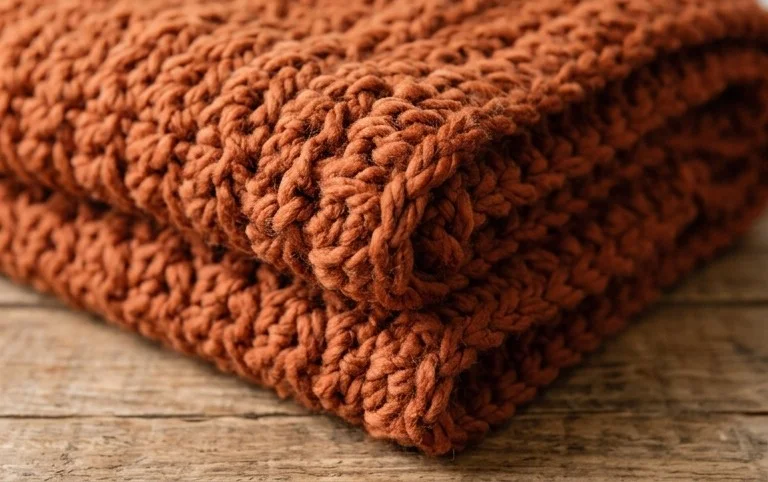
Your finished throw brings a comfortable layer of texture to your home that works in any living space. You might try working this project with a variegated yarn if you want to emphasize the stitch pattern or increase your hook size to create a looser, airier drape. Post a photo of your completed blanket on social media to show off those smooth rows. You can find more free patterns in our archive to keep your needles busy throughout the coming winter months.